Mold Inspection in Toronto & the GTA
A mold inspection identifies where mold exists in your home, where the moisture is coming from, and what remediation — if any — is actually needed. We combine visual assessment, moisture meter readings, thermal imaging, and humidity logging to answer the real question homeowners have: is this a problem, and how big is it?
Why Inspection Comes Before Everything Else
The biggest mistake we see homeowners make is jumping straight to remediation — or worse, to DIY bleach spraying — before anyone has actually mapped the problem. Health Canada's mould guidance is explicit that bleach is not a recommended treatment because it does not penetrate porous materials and can mask, rather than remove, contamination. Visible mold on the bathroom ceiling might be the tip of something bigger in the attic above. A musty smell in the basement might be coming from wet insulation inside the wall, not from the surface you can see.
A proper inspection answers four questions in this order: Is there active moisture? Where is it coming from? What materials are affected? How widespread is the contamination? Only after those are answered can anyone scope an honest remediation in line with the IICRC S520 standard for professional mold remediation. Active moisture almost always traces back to a recent water damage event — even one the homeowner forgot about.
What We Look At During an Inspection
Interior Visual Assessment
Every room, every accessible surface. Closets, behind furniture, under sinks, inside vanities, behind appliances, around toilets. We look for visible growth, staining, warping, peeling paint, and efflorescence on masonry.
Moisture Meter Readings
Pin and pinless moisture meters measure actual moisture content in drywall, wood framing, subfloor, and trim. Dry materials read under 16%; anything above 20% is active and needs investigation.
Thermal Imaging
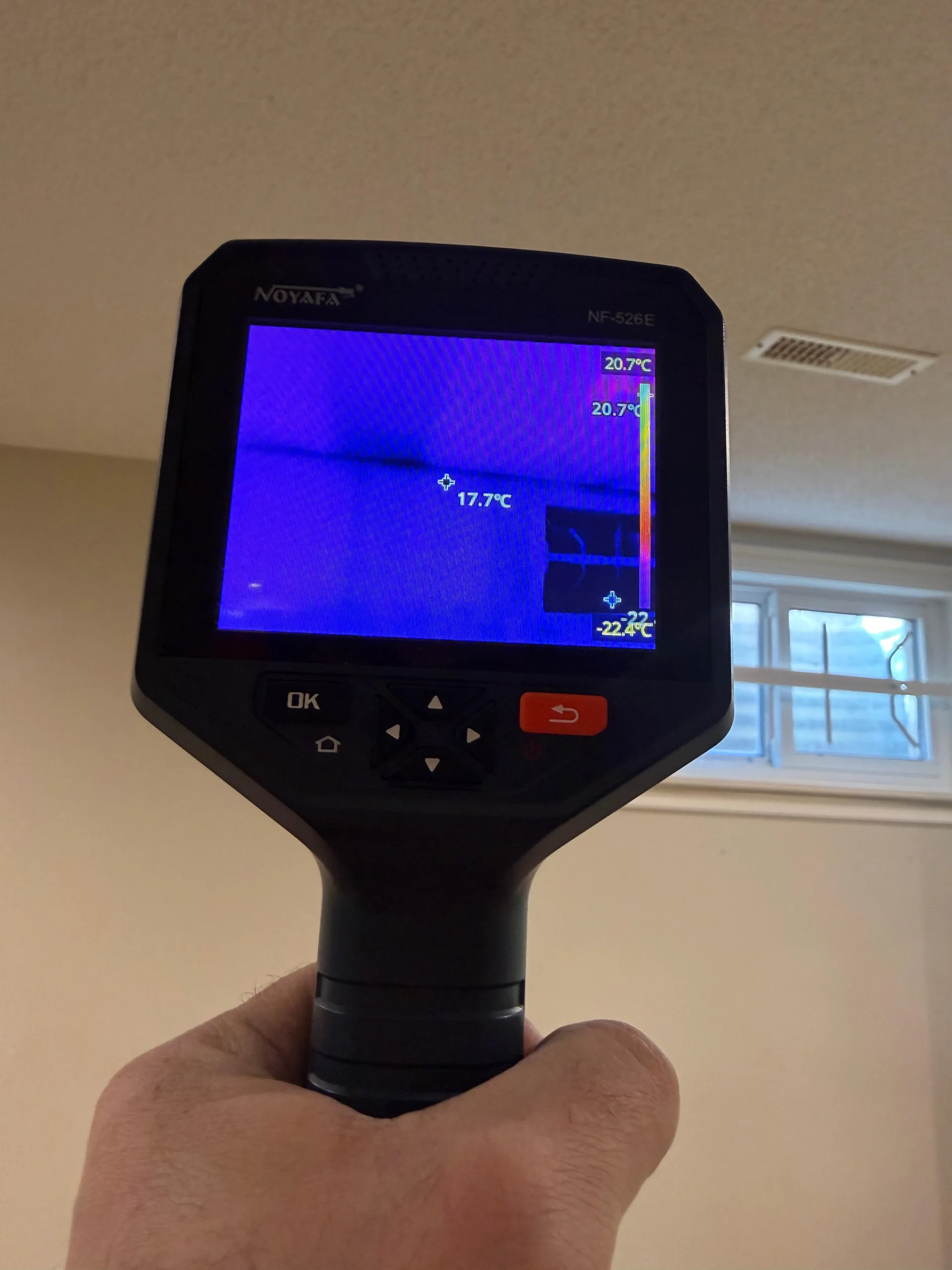
Infrared cameras show temperature differentials that indicate hidden moisture behind walls, under floors, and in ceilings. Wet materials evaporate and read cooler than surrounding dry surfaces — that is how we find the leaks you cannot see.
Humidity & HVAC Check
Indoor humidity readings (anything above 55% is a mold risk), bathroom fan verification (ducted to outside or to attic?), and visual check of the air handler, evaporator coil, and return plenum for amplification.
Attic, Basement & Crawlspace
These are where the problems actually live. Attic sheathing for condensation from poor ventilation, basement walls for efflorescence and foundation leaks, crawlspaces for vapour barrier integrity and groundwater.
Written Report
You get a photo-documented report with findings, moisture map, recommended scope (if any), and pricing. Honest reports: if there is no remediation needed, we say so.
Common Findings by Home Type
The inspection findings are remarkably predictable by housing vintage and neighborhood:
- Scarborough 1960s bungalows — attic mold from bathroom fans vented into the attic, basement mold at the sill plate from poor grading
- Toronto semis and row houses — rising damp in stone foundations, bathroom ceiling mold from inadequate ventilation in interior bathrooms with no window
- North York splits — mold at the wall-to-floor joint on the below-grade walk-out, and attic mold where the insulation is packed into the soffit
- Markham 2000s builds — attic sheathing mold from improper baffles, basement cold joint leaks, window well overflow into finished basement walls
- Condo units — bathroom ceiling mold from undersized or disconnected exhaust, bedroom exterior wall mold at corners from thermal bridging
When Testing Makes Sense
For most inspections, air or surface sampling is not necessary — the visible evidence and moisture readings are enough to scope remediation. Testing is worth the cost when: the contamination is hidden and you need to quantify the spore load, a household member has a diagnosed mold sensitivity, there is a dispute with a landlord or buyer, or you want post-remediation clearance verification from a third party. The US EPA's mold guidance is a useful homeowner-facing companion to the Health Canada material — same cleanup principles, slightly different framing. See our mold testing page for details on what sampling does and does not tell you.
Mold Inspection Emergency?
Available 24/7 across the GTA
Related Services
Why homeowners across the GTA call us first.
24/7 emergency response
A real technician answers the phone — not an answering service. Trucks roll within five minutes of your call.
IICRC certified, Baeumler approved
Every job follows IICRC S500/S520 protocols, so your insurance claim is documented to the standard adjusters expect.
Insurance handled directly
We bill your insurer, document the scope, and stay in front of the adjuster. You pay the deductible.
In-house from start to finish
Same crew from the first emergency call to final paint. No subcontractors, no handoffs, no finger-pointing.
Frequently Asked Questions
Think You Have Mold? Get a Proper Inspection First.
Free on-site assessment across the GTA when combined with remediation scoping. Detailed moisture mapping report included.